How to wash your Face: Face Wash vs Cleanser
2026-06-18

How to wash your Face: Face Wash vs Cleanser Most of us often mistake a face wash for a cleanser. While both the skincare products help in cleansing your skin, how they clean is not quite the same. It's important to make sure that either of the two products you are using fits your skin needs. To help you do that, we have outlined the subtle differences between the two. Read on to figure out which one or two you should be incorporating into your skincare routine.
Cleanser vs. Face Wash: What’s the Difference?
To settle the debate once and for all—and to ensure you’re using the best product for your skin type—let’s dig into the key differences on face wash vs. cleansers.

Face Wash
Face washes are water-based products (often gel, foam, bar, or powder formulations) that get very sudsy when massaged onto your skin.
They also tend to contain more astringent ingredients to help combat oil production.
The Elemis Clarifying Clay Wash is purifying clay-based facial wash that deeply cleanses the pores to lift away excess oil and makeup from the skin whilst reducing the look of blemishes and blackheads.
The foaming action and astringent qualities of a face wash mean that it really gets in there to deeply clean pores and sweep away oil.
For those with oily skin, this can be helpful.
However, people with dry, sensitive, combination, or normal skin types might find that face washes are too harsh for their complexion.
The Elemis Sensitive Cleansing Wash is perfect for all skin types, as it is specially formulated for sensitive and dry skin. It deeply purifies without feeling harsh on skin.
The refreshing gel formula leaves skin looking deeply cleansed with a healthy radiance.
If you accidentally remove too much oil from your skin, that can result in a tight, dry, or otherwise uncomfortable feeling.
Facial Cleanser
Facial cleansers also clean your skin, but are usually richer in texture compared to face washes. Think creamy or milky gels, oils, and balms ranging from thick to thin.
Additionally, face cleansing products are often formulated with ingredients that aim to nourish your skin, balance your complexion, and boost moisture levels.
The Elemis Dynamic Resurfacing Facial Cleanser is one of these products. It removes dulling pollutants, dirt and impurities from the skin with this gently foaming gel cleanser and reveal a more even and radiant complexion.
Because facial cleansers gently clean your skin without stripping away too much oil, they’re considered an ideal product for many skin types, including normal, sensitive, dry, and combination.
The Elemis Pro-Collagen Marine Cleanser is an energising gel cleanser that effectively removes daily grime, makeup and impurities whilst leaving skin with a youthful glow.
Even oily skin types can benefit from using a cleanser for their face, especially if they notice their skin feels tight or dry after washing.
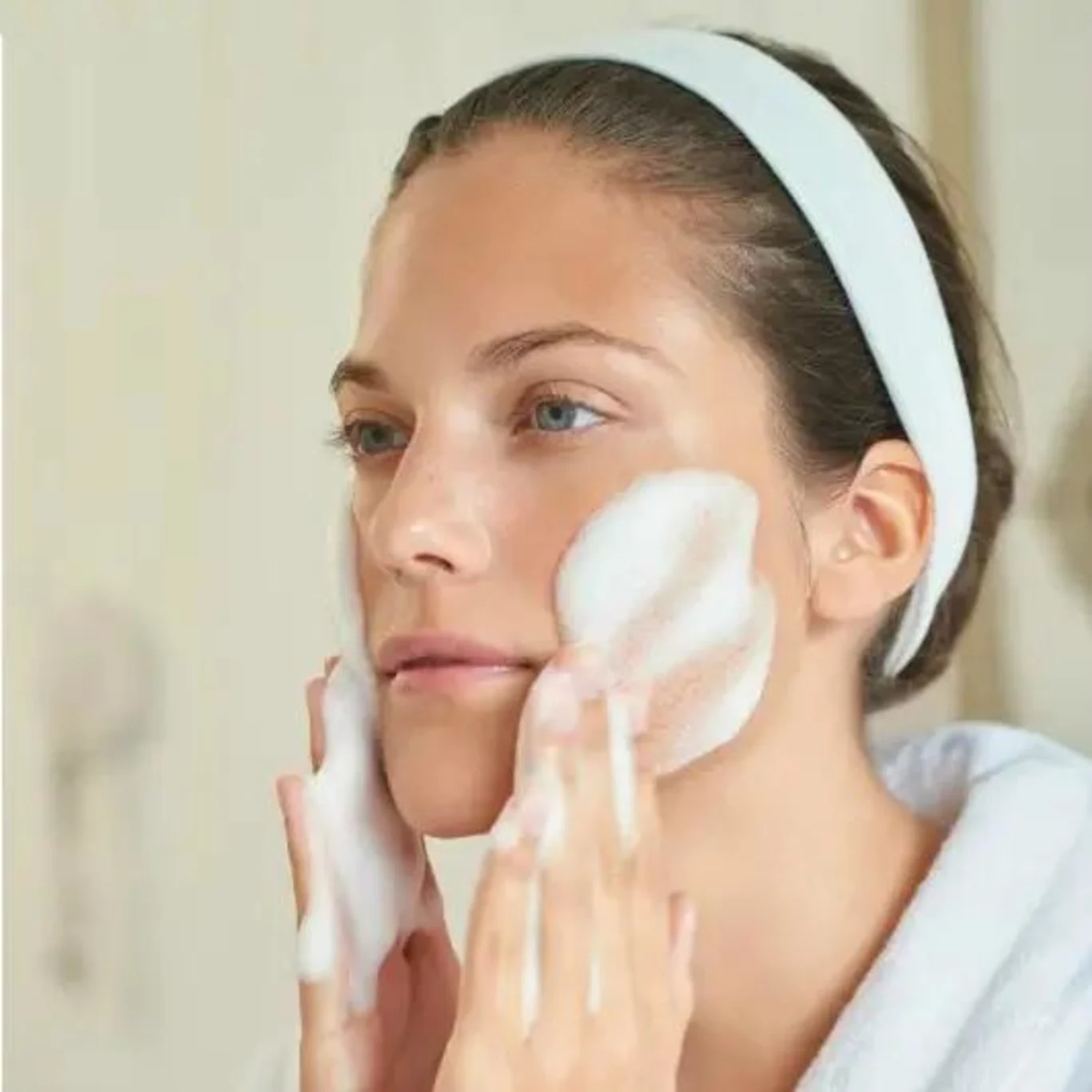
Cleansing Activity Of Cleansers And Face Washes
Face washes are water-based formulations available as gel, foam textures.
Their foaming and astringent properties deeply clean pores and combat oil production.
Cleansers, on the other hand, come in thick, milky, cream or clay texture and they primarily cleanse, hydrate, and soothe your skin.
Both cleansers and face washes contain synthetic detergents to wash away dirt.
These detergents, also called surfactants (surface active agents), are composed of a hydrophilic (water-loving) and hydrophobic (water-hating but oil or grease-loving) tail.
The hydrophobic parts attach to the oil and dirt to form structures called micelles. These micelles that trap the dirt are washed away with a good rinse.
Can You Use Face Wash And Facial Cleanser Together?

Yes, you can use both face wash and facial cleanser in your skincare routine, depending on your skin type.
If you are someone who is exposed to air pollutants frequently, consider using a cleanser first and then use a face wash afterwards to remove particles from your skin.
By conventional definition face washes can be said to be more suitable for oily skin than cleansers because cleansers are generally hydrating.
But now both the nomenclatures are used as interconvertible, serving the same purpose.
If you have oily yet sensitive skin, using both a face wash and a cleanser in your regimen can help to prevent irritation.
Double cleansing is great especially if your skin is prone to acne and gets oily.
Also, if you wear heavy makeup, double cleansing will help you get rid of the make-up residue on your skin. You may want to use the face wash before starting your day for a deep cleanse and use a cleanser during the day between workout sessions and before bedtime to remove all the dirt.
Later, you can use a toner to balance your skin’s pH and moisturize it to provide nourishment. We recommend either the calming Elemis Soothing Apricot Toner or the purifying Elemis Lavender Toner. Both hydrate and refresh skin without the use of alcohol.
You can adjust your products based on whether your skin feels dry or oily after cleansing. With cleansers you do not need to rinse off the product. You can use a washcloth or a towel to wipe it off.
How Often Should You Wash Your Face?
Should you wash your face in the morning? Only at night? Twice a day? Maybe more? How often you should wash your face is one of the greatest debates in the skincare world.
According to the American Academy of Dermatology, it’s best to limit it to twice a day (morning and night) and to also wash or cleanse after sweating.
Ultimately, the right frequency depends on your skin type.
For instance, some find balance in cleansing every evening but only rinsing with water in the morning. Conversely, many find that their skin looks best when they cleanse or wash both morning and evening. In rare instances, your skin might benefit from hitting the sink midday, as well, but usually only in situations where you’ve been sweating.
To make a long answer much shorter: Stick with once or twice daily, making sure you’re at least cleansing every night.
If it seems like your skin needs less, skip doing it in the morning and rinse with water or use micellar water instead.
Choosing Between Face Wash and Cleanser With Confidence

Both face washes and cleansers clear excess oil, dirt, and other pollutants from your skin, however, the additional benefits they provide depends on your skin type and needs.
Depending on your needs, you may also choose to use both of them together to derive maximum benefits.
Now that you’ve understood the differences between a face wash and a cleanser, we hope you won’t get stuck at the skincare section next time you are shopping.